



2026
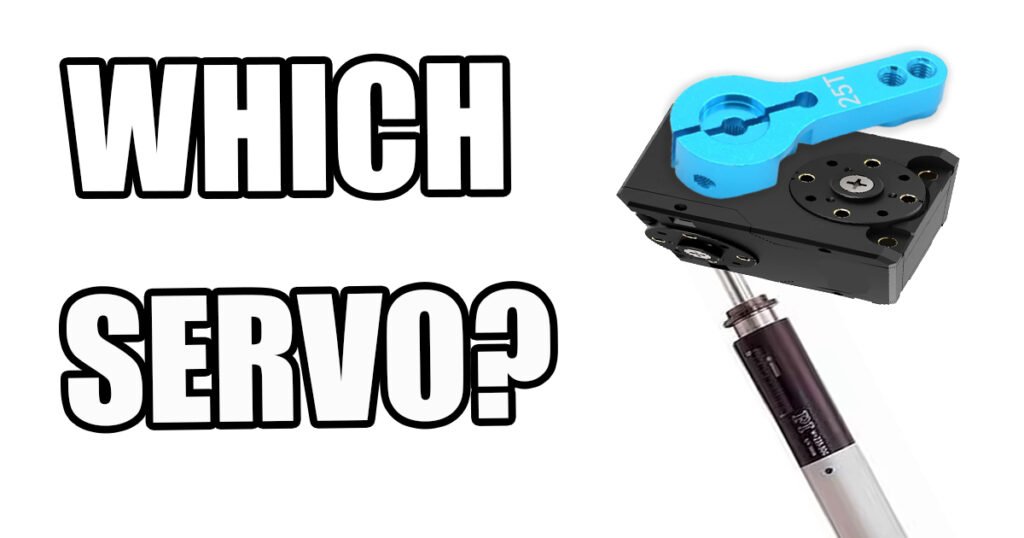
What Servo to Use?
Brushless, Digital, RS-485, TTL, PWM? Choosing the right servo motor is one of the most important decisions when building an animatronic or robotic character. The wrong choice can lead to weak movement, noisy operation, or constant failures. The right one gives you smooth, reliable performance that brings your creation to life.
Rotary vs Linear Servos
Rotary servos are the most common type. They rotate an output shaft through an arc, usually 180 degrees or even continuous rotation, making them perfect for heads, arms, jaws, and most character movements.
Linear servos move a shaft in and out instead of rotating. They’re ideal when you need straight-line motion, like extending tongues, piston-type actuator replacement, or certain neck mechanisms for example.
Metal Gears
If you are ever presented with an option to have metal gears, SELECT “YES”! Sometimes, especially in the micro size range, they won’t have that option. There’s a reason, but that’s a topic for later. Simply put: plastic gears will strip easier than metal gears. Trade off is typically cost for the manufacturer (plastic = cheap) and in some cases plastic gears may be a little more quiet than metal. You’d never notice, especially if your “quiet” plastic servo gear has stripped and is making a LOUD whining noise! Go full metal if you can (or at least “Karbonite”).
Brushed vs Brushless Servos
Most standard servos use brushed motors. They’re affordable and get the job done for many applications. Brushless servos can run smoother, last longer, run quieter, and handle higher loads, but they cost more. For high-end professional animatronics, brushless is often worth it. Think of this in terms of what a “brushed” motor is: you have a commutator and a stator which is electrically connected by carbon “brushes”. Old Dremel tools were notorious for having carbon brush issues so much that they typically would give a spare set of brushes in the box! A brushless motor has, well, no brushes. There are no contacting electrical surfaces to abrade and/or get contamination embedded causing premature wear. How does this type of magic motor work? Ask Nikola Tesla!
Analog vs Digital Servos
Analog servos are simpler and cheaper. They only update their position about 50 times per second, which can make the movement feel slightly delayed or “mushy,” especially under load. They also typically have weaker holding power, so they can sometimes get pushed out of position.
Digital servos are much faster and more precise. They update their position 300 to 400 times per second, which gives you quicker response, smoother movement, and way better holding torque. They also stay in position much more firmly and recover faster when something tries to move them.
The downside? Digital servos use more power and cost more money. One issue can be servo “hum”. In general the “hum” can be more substantial (signal noise and actual physical noise). You might be able to get in the guts of the digital servo’s brain and try tweaking the dead band. Some effects artists have simply moved on from them completely because of this issue.
Given the above, for most animatronic applications digital is the better choice unless you’re on a very tight budget.
Feedback Types in Servos
Potentiometer
- Pros: Very cheap, simple analog output, absolute position (knows where it is right after power-up), easy to implement.
- Cons: Wears out over time from physical contact (limited lifespan in high-cycle use), limited rotation range on many models, sensitive to vibration/dust/temperature changes which causes noise and drift, lower precision and repeatability. Good for low-cost, low-duty animatronics. Not ideal for precision or long-life applications.
Optical Encoder
- Pros: Very high resolution and accuracy, excellent for precise positioning, fast response.
- Cons: Expensive, sensitive to dust, dirt, oil, moisture, and vibration (anything that blocks the light path kills it), more fragile, higher power consumption. Best for clean, controlled environments like lab robotics or CNC. Rarely used in standard animatronic servos.
Magnetic Encoder (Hall effect)
- Pros: Very durable and robust — resists dust, oil, moisture, vibration extremely well, longer lifespan (non-contact), lower cost than optical, lower power use, good reliability in harsh conditions.
- Cons: Generally lower resolution and accuracy than optical encoders, can be affected by strong external magnetic fields. This is the sweet spot for many modern industrial and high-reliability servos. There are exceptions, of course...
Harmonic Drive Servos
A normal servo — whether it’s a cheap hobby one, a digital servo, brushless, or even a high-end industrial one — uses a standard gearbox like spur gears or planetary gears. That always gives you some backlash, meaning a tiny bit of play or slop when the direction changes.
Harmonic Drive’s micro-sized integrated servos (like the RSF-5 series) are completely different. They use a strain wave gear (as opposed to a cycloidal, planetary, or standard spur gear reduction), which gives true zero backlash. That means incredibly smooth, precise, and stiff movement with almost no play at all. In many modern humanoid robots like Tesla’s Optimus, Boston Dynamics Atlas, and others these are the go-to choice for precision and high load Degrees of Freedom.
The huge upgrades are:
- Zero backlash and high precision — Standard servos have some play; these have basically none.
- Integrated CAN controller — The servo controller is connected and shipped as a single unit. You only need one thin 4-wire cable for power and communication (CANopen).
- Much higher precision and stiffness — Dual encoders on some models, excellent repeatability, and way better performance under load.
- Advanced control — Full position, velocity, and torque modes with real feedback.
- Rated for MIL-Spec quality — precision, reliability, and more under MIL-Spec Here-Is-A-MASSIVE-Book-Of-Requirements-For-You-To-Meet-Or-ELSE
The trade-off is they’re significantly more expensive and usually lower speed than regular servos.
For high-end animatronics where you need buttery smooth, precise, quiet movement with zero slop these are on another level. If you have a Disney level budget then…why not?
Servo Communication Methods: PWM, TTL, RS-485, and CAN Bus Explained
When building animatronics or robots, how your controller communicates with each servo is a critical decision. The method you choose directly impacts wiring complexity, reliability, precision, and how many servos you can realistically control.
PWM – The Traditional Approach
PWM, or Pulse Width Modulation, is the classic method used by most basic hobby servos. A control signal is sent every 20 milliseconds, and the width of that pulse tells the servo where to move. While simple and inexpensive, PWM has significant limitations in animatronics. Each servo requires its own signal wire, making wiring messy very quickly. It also offers limited precision and is highly susceptible to electrical noise.
TTL Serial Communication
TTL serial has become the go-to method for modern smart servos in animatronics. Instead of using one wire per servo, multiple servos can share a single data line by giving each servo its own unique ID. This dramatically simplifies wiring. TTL also allows two-way communication, so you can receive real-time feedback including current position, temperature, voltage, and load. Most Dynamixel and Feetech smart servos use TTL.
RS-485 – The More Robust Option
RS-485 is essentially an upgraded, industrial-strength version of TTL serial. It uses differential signaling across two wires instead of one, which gives it excellent noise resistance and allows for much longer cable runs. This makes RS-485 ideal for larger animatronic characters or installations where cables must travel long distances or run near motors and power lines. Many professional-grade Dynamixel and Feetech models offer RS-485 versions.
CAN Bus
CAN Bus is a high-performance communication protocol widely used in automotive and industrial applications. It offers exceptional reliability, sophisticated error detection, and the ability to support a very large number of devices. While more complex to implement, CAN is becoming increasingly popular in advanced robotics and high-end professional animatronics where maximum reliability is required.
Which Communication Method Should You Choose?
For most animatronic projects, TTL serial offers the best balance of simplicity, performance, and ease of use. Choose RS-485 when working on larger builds or when running long cable lengths. Stick with basic PWM only for very small, simple projects with just a few servos. CAN Bus is best reserved for complex professional installations.
FAQ
What servo is best for beginners?
Digital rotary servos in the mid-size range are usually the safest starting point.
Should I use linear or rotary servos?
Use rotary for anything that needs to rotate or swing. Use linear when you specifically need straight push-pull motion.
Are brushless servos worth the extra money?
For professional or frequently used characters, yes. For hobby projects, standard digital servos are usually fine.
When should I consider harmonic drive servos?
Only when you need extremely precise, smooth, zero-backlash movement and have the budget for it.
What’s the advantage of TTL servos?
Much simpler wiring for large numbers of servos plus better feedback and control.
Ready to build something amazing?
Whether you’re planning a simple puppet or a complex full-scale character, we can help you choose the right servo technology for your project. Contact us to discuss your next custom animatronic build.
3 Replies to “What Servo to Use?”